Why Compostable Bags Crack in Freezers — and How Material Science Solves It
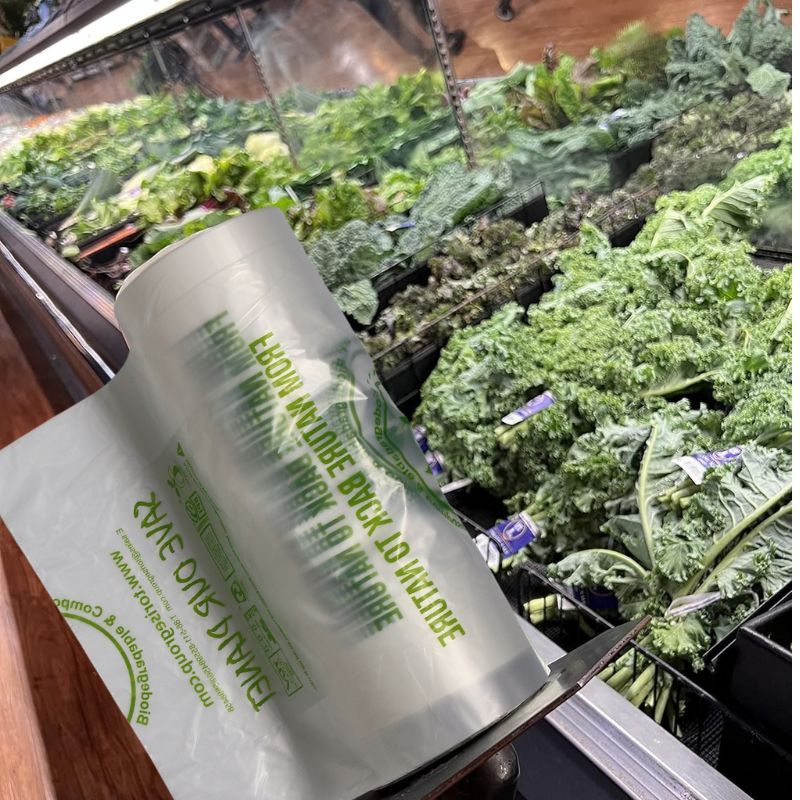
You take a compostable bag out of the freezer—and it cracks in your hands.
For many users, this moment is confusing and frustrating. The bag looked strong, felt durable, and yet it fails at the exact point of use. As a result, some begin to question whether compostable packaging is truly suitable for cold storage.
At Torise Biomaterials, we see this not as a flaw in sustainable materials, but as a predictable response of biopolymers to low temperatures. By understanding the science behind cold resistance, this issue becomes manageable—and in many cases, entirely preventable.
What Happens to Compostable Materials at Low Temperatures
To understand why compostable bags may crack in the freezer, we need to look at a key concept in polymer science: Glass Transition Temperature (Tg).
The glass transition temperature is the point at which a polymer changes from a flexible, rubber-like state to a rigid, glass-like state. Below this temperature, molecular movement becomes restricted, and the material loses its ability to deform without breaking.
Why PLA Becomes Brittle in the Cold
PLA (Polylactic Acid) is one of the most widely used bio-based materials in compostable packaging. It offers excellent clarity, stiffness, and renewable content—but it also has a relatively high glass transition temperature, around 55°C (131°F).
This means:
• In refrigerators and freezers, PLA is far below its Tg
• Flexibility is significantly reduced
• Cracking or “shattering” can occur when the material is stressed
This behavior is not a defect. It is an inherent material property that must be addressed through formulation and application design.
The Key to Cold Resistance: Optimizing PLA–PBAT Blends
Most high-performance compostable films are not made from pure PLA. Instead, they rely on engineered blends, most commonly combining PLA with PBAT (Polybutylene Adipate Terephthalate).
PBAT plays a critical role in cold resistance:
• It has a glass transition temperature as low as –30°C
• It remains elastic in sub-zero environments
• It significantly improves impact resistance and tear strength
How Torise Designs Freezer-Grade Compostable Films
At Torise Biomaterials, our R&D team carefully optimizes:
• The PLA-to-PBAT ratio
• The quality and molecular structure of PBAT
• Supporting bio-based polyesters that enhance toughness
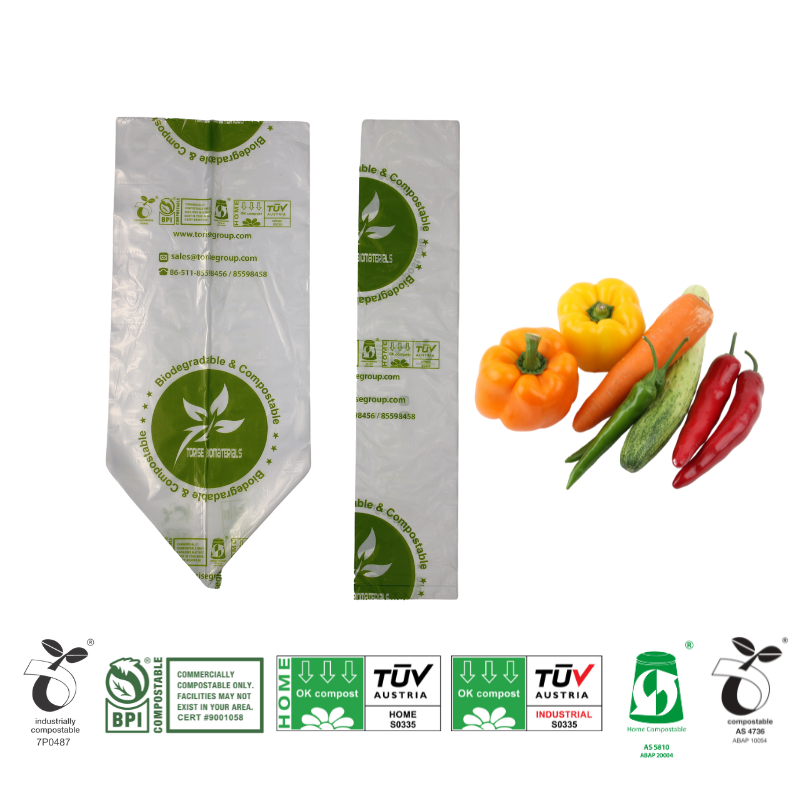
By increasing the proportion of high-quality PBAT and fine-tuning the blend, we ensure that the film remains flexible and resilient during refrigerated and frozen storage.Click to learn more about our compostable produce bags.
Professional Guidance:
If your application involves cold storage or freezing, look for products labeled “Freezer-Grade” or “High-Toughness.” Torise also offers custom formulations, allowing us to adjust material performance to specific temperature thresholds and handling conditions.
Engineer-Recommended Handling Practices for Cold Storage
Material formulation is only part of the equation. How a compostable bag is handled—especially immediately after freezing—has a direct impact on its performance.
Best Practices for Freezers and Cold Rooms
1. Allow a Short Tempering Period
The most critical moment is the first 60 seconds after removal from the freezer. Let the bag rest at room temperature for 1–2 minutes before opening or unfolding it. This brief tempering period allows molecular chains to regain flexibility.
2. Manage Sharp or Rigid Contents
Frozen proteins with bones or sharp edges place concentrated stress on film materials.
Engineer’s Tip: Use PLA-coated paper bags as a primary wrap. The paper adds puncture resistance, while the PLA coating provides a moisture barrier. The wrapped item can then be placed inside a secondary compostable bag.
3. Control Condensation During Temperature Changes
Condensation is normal when moving from cold to warm environments. While Torise materials are engineered to maintain structural stability, gently patting the bag dry helps prevent slips, localized stress, or accidental tearing.
Refrigerated Storage: An Often-Overlooked Advantage
In standard refrigeration (above freezing), compostable bags often perform exceptionally well—especially for fresh produce.
Natural Breathability Supports Freshness
Compostable materials are generally more gas-permeable than conventional PE plastics. This allows excess gases, such as ethylene, to escape—helping slow spoilage for leafy greens, herbs, and mushrooms.
Preparation Still Matters
For best results:
• Ensure produce is dry before bagging
• Avoid trapping excess surface moisture
Over extended storage periods, localized water exposure can soften the material and reduce mechanical strength.
Will Compostable Bags Decompose in the Refrigerator?
This is one of the most common concerns we hear—and the answer is clear.
Under the dry, cold conditions of a household refrigerator, compostable bags remain physically stable for weeks or even months. Composting requires a specific combination of conditions:
1. High microbial activity
2. High humidity
3. Sustained heat, typically above 50°C (122°F)
Refrigerators provide the opposite environment. Until the bag reaches an industrial or home composting system, it will remain a reliable protective barrier.
Understanding Performance Boundaries—With Transparency
While compostable films continue to advance, they are engineered differently from traditional, non-degradable PE plastics. They are optimized for the circular economy—designed to perform reliably during use and responsibly at end-of-life.
For ultra-long-term frozen storage exceeding one year, performance requirements become highly application-specific. In these cases, we recommend consulting with our technical team to evaluate barrier properties, thickness, and blend design.
Conclusion: Sustainability Guided by Science
Choosing compostable packaging is not about sacrificing performance—it is about choosing the right material for the right environment.
Whether you are:
• Managing frozen food logistics
• Optimizing refrigerated produce packaging
• Or transitioning away from conventional plastics
Torise Biomaterials provides science-backed, application-specific solutions. Our technical advisors offer free consultations to help determine the ideal formulation, thickness, and structure for your cold-chain needs.
Not sure which compostable solution fits your application?