Compostable Shopping Bags: What B2B Buyers Should Check Before Ordering
B2B Buying Guide · Compostable Packaging
For retailers, supermarkets, grocery stores, and packaging distributors,
choosing compostable shopping bags is not
simply a matter of replacing PE with a “greener” material.
The most common compostable shopping bag
formats include T-shirt bags, die-cut handle bags,
and other custom handle styles.
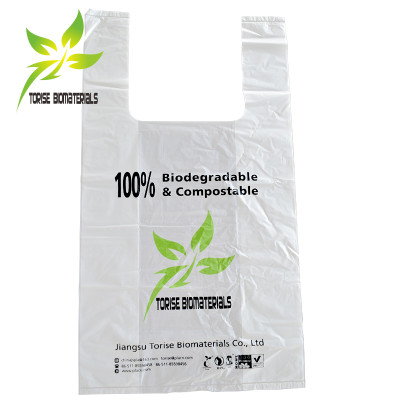
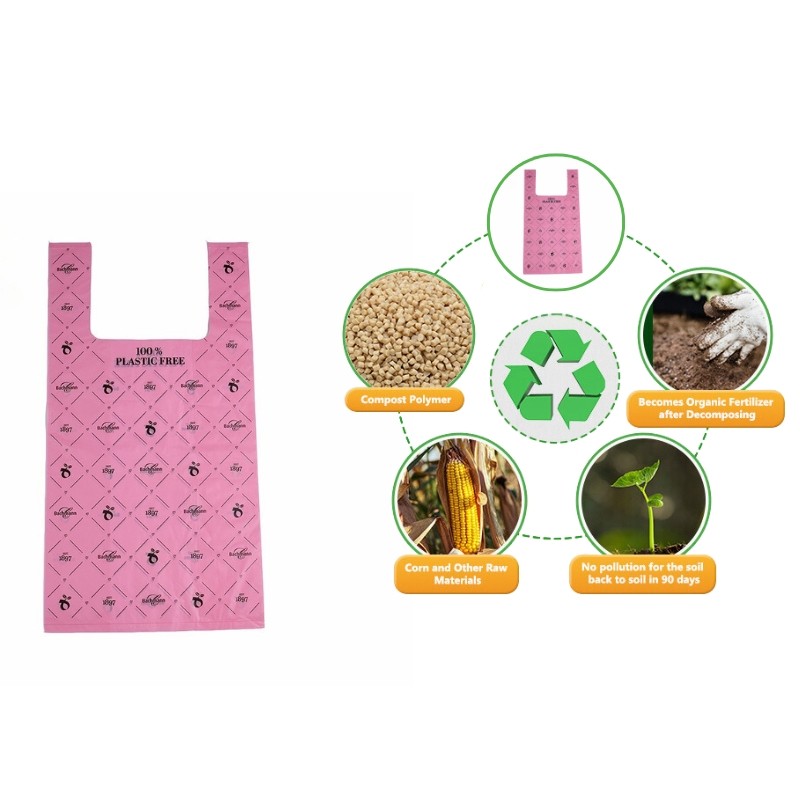
T-shirt compostable shopping bag
T-shirt bags are practical for supermarkets,
grocery stores, convenience stores, and takeaway applications because they
are quick to open, easy to carry, and can be produced in high volumes.
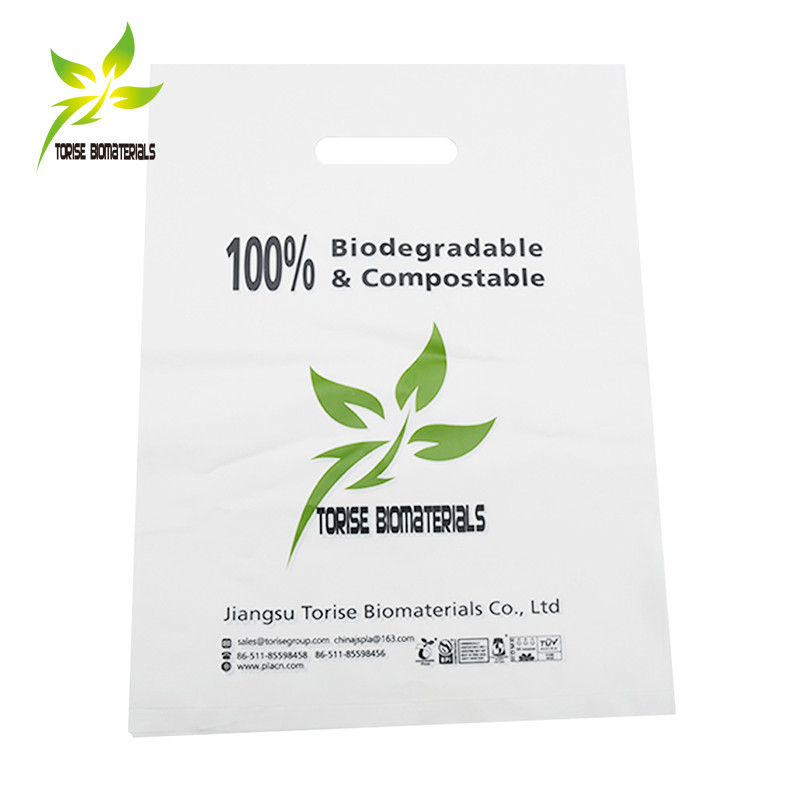
Die-cut compostable shopping bag Die-cut handle bags provide a cleaner retail
appearance and are often used by clothing stores, specialty retailers, gift
shops, and brands that want more space for printed graphics.
Before choosing a bag style, ask:
These answers determine the required film thickness, bag dimensions,
handle design, and sealing structure.
Compostable shopping bags can be produced in different thicknesses depending
on their intended use. Torise currently supports shopping bag thicknesses
such as 20–60 μm, with customized
specifications available.
A thinner film may work well for lightweight purchases, while heavier grocery
loads require a stronger structure and appropriate thickness.
But thickness alone does not tell you whether a bag is suitable.
Helps evaluate whether the film can withstand the expected pulling force
during handling and carrying.
Important when bags contain products with edges, corners, or concentrated
loads.
The handle area should be evaluated separately because it experiences
concentrated stress during carrying.
A suitable film thickness is not enough if the finished bag structure
cannot reliably hold the intended load.
For example, if a supermarket expects customers to carry several kilograms
of groceries, simply specifying “50 μm compostable film” is incomplete.
The manufacturer should confirm that the finished bag structure has been
designed and tested for the required load.
This is one of the most important points when purchasing
compostable carrier bags.
Industrial compostability and home compostability are not the same claim.
For the European market, EN 13432 is a key
standard for industrially compostable packaging. In the US,
ASTM D6400 is commonly used for compostable
plastic products and is associated with certification programs such as BPI.
Torise supports certification requirements for different markets, including
EN 13432/DIN CERTCO, ASTM D6400/BPI, AS 4736 and AS 5810, depending on the
product and configuration.
Instead of asking
“Is this bag compostable?”
Ask the supplier
“Which compostability standard and certification apply to this exact bag
specification and target market?”
If a bag is intended to be marketed as
home compostable, the applicable
certification should be verified separately rather than inferred from an
industrial compostability certificate.
Certification should be checked against the actual product specification.
Buyers should avoid assuming that a general company certificate or a
certificate for one product automatically covers every compostable bag
configuration.
For retailers and private-label buyers,
compostable shopping bags are often part
of the customer-facing brand experience.
Finished width, height, gusset and handle dimensions can be developed
according to the application.
Thickness can be selected according to the intended load and required
performance.
Custom colors, logos and artwork can be developed for retail and
private-label programs.
Bulk packing, carton information and private-label packaging requirements
can be specified before production.
For a quotation, sending the manufacturer only a logo is usually not enough.
A more useful RFQ should include the
bag type, finished dimensions, thickness or target load, color,
printing requirements, estimated quantity, packing method, and destination market
.
That allows the supplier to recommend a realistic structure instead of
quoting a generic bag.
Before placing a large order, ask for three things:
This is particularly important for distributors and private-label customers,
where thousands or millions of bags may be ordered over multiple production
runs.
A practical B2B specification can be as simple as:
B2B Shopping Bag Specification
Bag style + size + thickness + target load + material structure +
printing + certification requirement + packing + quantity
That is much more useful to a manufacturer than simply requesting
“eco-friendly shopping bags.”
Torise manufactures custom
compostable shopping bags and
compostable grocery bags for retailers,
supermarkets, wholesalers, distributors, and private-label programs.
Available formats include T-shirt, handle, die-cut and other customized
bag structures, with material, dimensions, thickness, printing and
certification requirements developed according to the intended market
and application.
If you already have a bag drawing or an existing PE bag sample, the easiest
way to start is to send the
size, thickness, application, expected load, quantity and target market
.
The manufacturer can then evaluate the required compostable structure and
provide a more specific quotation and sample plan.
Compostable Shopping Bags: What B2B Buyers Should Check Before Ordering
1.
Choose the Bag Style According to How It Will Be Used
2.
Thickness Should Be Matched to Load — Not Chosen by Guesswork
Tensile Strength
Tear Resistance
Handle Strength
Bottom Seal Strength
3.
Compostable Does Not Automatically Mean Home Compostable
4.
Custom Printing Is More Than Adding a Logo
Bag Dimensions
Film Thickness
Color & Printing
Packaging
5.
What Should a Wholesale Buyer Request Before Mass Production?
6.
A Better Way to Specify Compostable Shopping Bags
From Specification to Bulk Production