
Knowledge
 Bio-Based vs. Biodegradable: Key Differences for Packaging BuyersOct 16,2026Bio-based and biodegradable describe two different properties of a material. Bio-based refers to the origin of its raw materials, while biodegradable refers to its ability to be broken down by microorganisms under specified conditions.
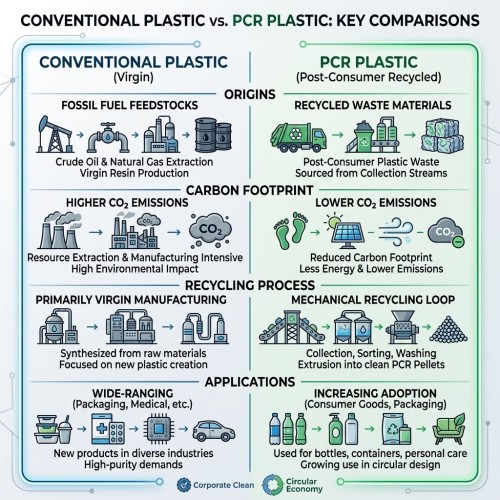
- Conventional Plastic vs. PCR Plastic: Key DifferencesOct 14,2026Compare conventional and PCR plastic by material origin, performance, cost, food-contact safety, and sustainability. Learn how to select the right packaging material.
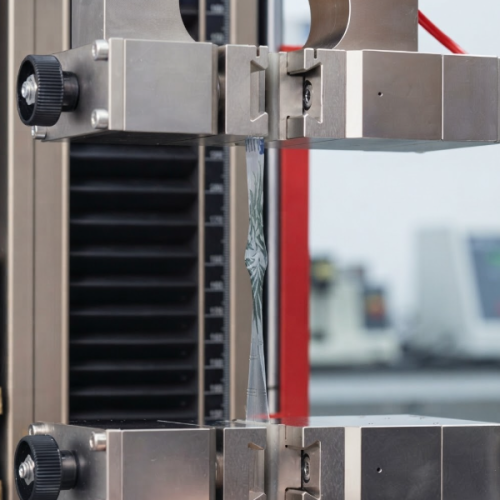
- Behind the Compostable Bag: Compostable vs. PE StrengthSep 28,2026Are Compostable Bags as Strong as PE Bags?In many applications, yes. Compostable films can be formulated to provide the tensile strength, flexibility, tear resistance and load capacity required for specific bag applications.
- Can You Compost Vegetable Bags? What Happens After UseSep 21,2026Can you compost vegetable bags? Learn when compostable produce bags can be composted, why certification is not enough, and what to check before disposal.
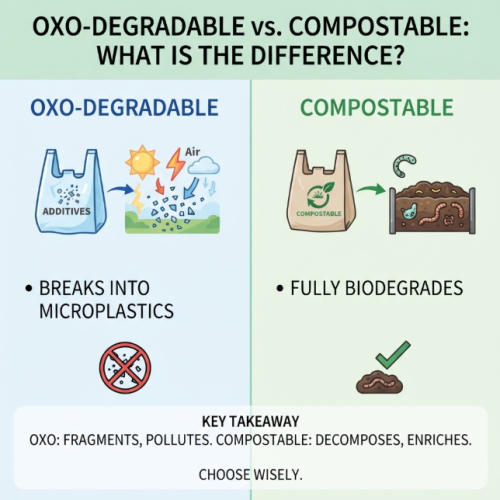
- Oxo-Degradable Plastic Bags vs. Compostable Bags: What Is the Difference?Sep 17,2026If you are sourcing biodegradable or sustainable plastic bags, you may come across terms such as oxo-degradable, oxo-biodegradable, biodegradable, compostable, bio-based, and bioplastic. These terms are not interchangeable.
- Will Compostable Bags Degrade During Shipping or on the Shelf?Sep 15,2026A common question from buyers sourcing compostable bags is: “If a bag is compostable, will it start breaking down during international shipping or while sitting on a warehouse or retail shelf?”
- Compostable Zip Lock Bags: How to Choose the Right Material for Different ApplicationsSep 14,2026For B2B buyers, choosing the right compostable zip lock bag therefore starts with the application. The intended use determines the required film properties, material formulation, thickness, zipper performance and applicable certification.
- How PLA, PBAT and Starch Work Together in Biodegradable Raw MaterialsSep 9,2026The key is not simply choosing a biodegradable raw material. It is developing a formulation that provides the right balance of processing behavior and finished-product performance for a specific application.
- PFAS-Free & Compostable Food Packaging: The End of Forever Chemicals in PackagingMay 26,2026The challenge is balancing grease resistance, food safety compliance, compostability, recyclability, and cost efficiency. This is why PFAS‑free packaging is no longer just about materials — it is becoming a technical and regulatory capability.




- EU Compostable Packaging Regulations 2025–2026: What Brands & Retailers Must KnowFor brands and retailers, compostable packaging is no longer simply about using “green” materials. The focus is shifting toward verified certification, proper disposal infrastructure, transparent labeling, chemical safety, and full lifecycle responsibility.May 11,2026
- Why Compostable Bags Crack in Freezers — and How Material Science Solves ItThis guide explores the material science behind compostable bags in cold storage, specifically focusing on the performance of PLA and PBAT blends. Learn why bio-packaging becomes brittle in the freezer and discover professional handling tips—like the "tempering" rule—to ensure food freshness and bag integrity. Torise Biomaterials provides authoritative insights for a seamless, plastic-free kitchen.Jan 14,2026
- Can You Compost Tea Bags, Coffee Grounds, and Paper Bags? Your Ultimate Guide to Eco-Friendly Kitchen Waste ManagementStruggling with the compost conundrum over tea bags, coffee grounds, and paper bags? This expert guide from TORISE BIOMATERIALS clarifies what you can and cannot compost at home, exposing common contaminants like plastic in tea bags. Learn the simple 3-step method to create nutrient-rich compost and discover why choosing TORISE's ASTM D6400/EN13432 certified compostable bags and liners is critical for a plastic-free, truly circular waste system.Dec 30,2025
- How to Choose the Best Compostable Pallet Wrap for Sustainable PackagingThis comprehensive guide explains how to choose high-performance compostable pallet wrap that matches or exceeds traditional plastic's durability and stretch while offering true industrial composting. Learn about key certifications (ASTM D6400/EN13432), material science behind PLA/PBAT blends, total cost of ownership, and implementation strategies for transitioning to sustainable packaging solutions that reduce environmental impact without compromising load security.Dec 19,2025
- How Long Does Compostable Cutlery Take to Decompose? The Truth Behind the TimelineHow long does compostable cutlery take to decompose? In industrial composting facilities, it breaks down in 3-6 months, but in home compost or landfills, it can take years. This guide explains the key factors—material, environment, and certification—that control the timeline. Learn the correct disposal methods to ensure your eco-friendly utensils fulfill their promise, and discover how Torise Biomaterials’ certified compostable cutlery is engineered for guaranteed decomposition performance.Dec 12,2025
- Can You Compost Dog Poop? Safe Techniques with Compostable BagsCan you compost dog poop? Yes, but safely composting pet waste requires specific techniques to eliminate pathogens. This guide explains the essential role of certified compostable bags in creating a hygienic, plastic-free system. Learn how to effectively manage a dedicated composter and discover why Torise Biomaterials' BPI-certified dog waste bags are the reliable, eco-friendly solution for turning a daily chore into a sustainable practice.Dec 5,2025
- Are Compostable Bags Recyclable: The Complete GuideDiscover why compostable bags cannot be recycled and how they contaminate recycling streams. Learn the crucial differences between composting and recycling processes, proper disposal methods through industrial composting, and how Torise Biomaterials provides certified compostable solutions with BPI and OK Compost certifications for genuine sustainability.Nov 27,2025
- Do Compostable Bags Break Down in Landfills? The Truth About "Eco" Bag DecompositionDiscover why compostable bags fail to decompose in landfills due to anaerobic conditions, creating methane emissions instead of breaking down. Learn the crucial difference between compostable and biodegradable bags, and how proper disposal in industrial composting facilities ensures real environmental benefits. Torise Biomaterials provides certified sustainable packaging solutions that complete the circular economy when disposed correctly.Nov 14,2025

Are you looking for a reliable manufacturer of down home textile products?
We can quickly provide customers with market analysis, technical support and customized services.Contact Person

- Full Name:
- Sales Team
- Tel:
+86 18151919890
+86 0511-85598456
- Email:
- sales@torisegroup.com
- Address:
- Bio based industrial zone, Nanle County , Puyang , Henan , China
subscription