EU PPWR 2026 Deadline: A Clear Compliance Guide for Importers
If you import goods into the EU, your packaging must pass new rules starting August 12, 2026. Get it wrong, and you risk customs delays, fines, and lost sales. This guide cuts through the complexity to tell you exactly what to do, and when.
Torise Biomaterials supplies PPWR-ready, PFAS-free, and certified compostable packaging solutions.
First: The Master Timeline (This Clears Up All Confusion)
Many think “2026 = everything changes.” That’s wrong. The PPWR rolls out in phases. Here’s the simple overview:
PPWR Key Timeline
| Date | What Happens | What It Means for You |
|---|---|---|
| 11 Feb 2025 | PPWR enters into force | Law is adopted, but no immediate action needed. |
| 12 Aug 2026 | PPWR starts applying | ! Safety & legality checks begin at the border. |
| 2026–2027 | Transition period | Time to gradually change materials and designs. |
| 12 Feb 2028 | Compostability required for specific items | Tea bags, coffee pods, fruit labels must be compostable. |
| 12 Aug 2028 | EU-wide packaging labels mandatory | New sorting symbols must be on all packaging. |
| 2030 onward | Higher circularity targets | Future-proof your packaging now to stay competitive. |
The Core Idea:
•2026 is about Safety: “Is my packaging legal and free of banned substances like PFAS?”
•2028 is about Design & Recovery: “Is it compostable where required, and correctly labeled for recycling?”
Although some requirements will not take effect until 2028, material certification and supply chain transitions require 12-18 months, so the process must begin now.
What You MUST Do By August 2026
From this date, authorities can stop non-compliant packaging. Your immediate focus must be on safety and legality.
| Requirement | What You Need to Do |
|---|---|
| PFAS Limits | Ensure food-contact packaging is PFAS-free or below the strict thresholds. |
| Material Safety | Remove all prohibited substances and avoid unverified "green" claims. |
| Basic Design | Packaging should not clearly prevent recycling or recovery. |
| Documentation | Have technical files ready to prove compliance if asked. |
What is NOT required yet in 2026?
What This Means in Practice:
•Compostability for most products.
•The new EU harmonized labels.
•Meeting high recyclability grades.
Compostability: The 2028 Rule (Start Planning Now)
The EU mandates compostability only for items that typically end up in food waste. This starts February 12, 2028.
Products that MUST be industrially compostable (certified to EN 13432):
✅ Tea bags
✅ Coffee filters & pads
✅ Coffee pods (single-serve)
✅ Fruit & vegetable stickers (including the adhesive)
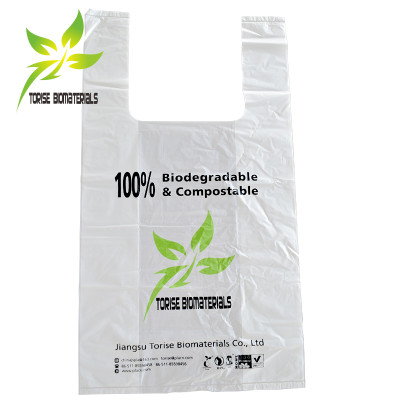
The Biggest Confusion: Very Lightweight Plastic Bags (VLPCBs)
This is critical: The EU does NOT ban all thin plastic bags.
•The Rule: For bags under 15 microns, each member state decides if they must be compostable.
•The Condition: A country can only require compostability if it improves food-waste collection (e.g., using them as bin liners).
| Country Situation | Result for Importers |
|---|---|
| Italy, France | Compostable bags are already mandatory. |
| Other EU Countries | Traditional plastic bags may still be allowed. |
| Future Changes | Possible, but will happen country by country. |
Your Rule: Always check the national rules of your target market, not just the EU law.
New Packaging Labels: Plan Your Redesign
The EU will introduce one common labeling system to replace the current patchwork.
•By August 2026: EU publishes the final label designs.
•From August 2028: These labels become mandatory on all packaging.
The labels will show which bin to use. Any claim like “Compostable,” “Biodegradable,” or “Eco-friendly” must be backed by real certifications (e.g., Seedling logo) or it will be considered illegal greenwashing.
PFAS: The Non-Negotiable 2026 Rule
Starting August 12, 2026, food-contact packaging must meet these strict limits:
•Individual PFAS: ≤ 25 ppb
•Total PFAS: ≤ 250 ppb
•Total Fluorine: ≤ 50 ppm
Packaging that exceeds these limits cannot enter the EU market. Torise Biomaterials’ PLA and PBAT-based solutions are inherently 100% PFAS-free.
Your Action Plan: A Practical Checklist
| Timeframe | Priority Actions |
|---|---|
| NOW – Early 2026 |
1. Audit for PFAS – Test or get guarantees from suppliers. 2. Review material safety of all packaging components. |
| During 2026 |
1. Gather certifications from suppliers. 2. Verify all environmental claims on packaging. |
| 2026 – 2027 |
1. Plan and source compostable alternatives for 2028-mandated items. 2. Begin design updates for the new 2028 labeling. |
| Before 2028 |
1. Complete packaging redesigns with new EU labels. 2. Ensure full supply chain transition to compliant materials. |
Final Summary for Decision-Makers
•2026 is not “D-Day” for everything – it’s the start of safety and substance regulation.
•The real design shift comes in 2028 with compostability and labeling rules.
•Thin plastic bag rules depend entirely on the country you’re importing into.
•Early preparation avoids costly last-minute redesigns and compliance shocks.
Torise Biomaterials helps importers move step-by-step into PPWR-ready, low-risk packaging with certified, PFAS-free solutions.