Home / All / Knowledge / Compostable Zip Lock Bags: How to Choose the Right Material for Different Applications
Compostable Zip Lock Bags: How to Choose the Right Material for Different Applications
Sep 14,2026
Compostable Zip Lock Bags: How to Choose the Right Material for Different Applications
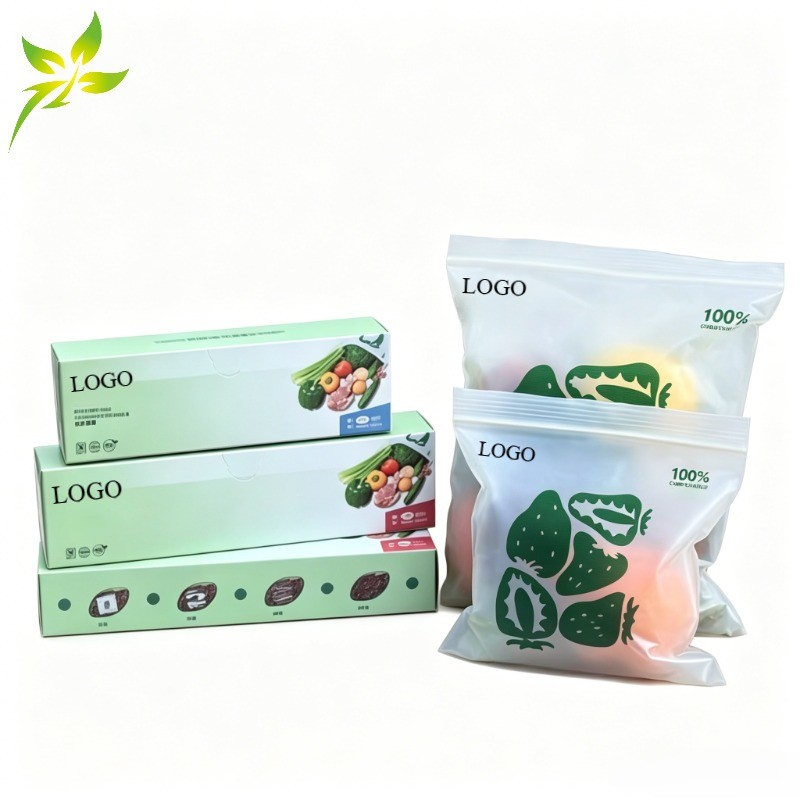
Compostable zip lock bags are used across a growing range of packaging applications, from food storage and sandwiches to garment packaging, retail products and private-label packaging.
Although the basic bag format is similar, the material requirements can be very different. A compostable zip lock bag designed for sandwiches may need food-contact compliance, flexibility and reliable resealing, while a bag for garments may focus more on appearance, tear resistance and handling performance.
For B2B buyers, choosing the right compostable zip lock bag therefore starts with the application. The intended use determines the required film properties, material formulation, thickness, zipper performance and applicable certification.
Where Are Compostable Zip Lock Bags Used?
The main advantage of a zip lock bag is its combination of flexible packaging and resealable closure. This makes the format suitable for many products that need protection, organization or repeated opening and closing.
Application
Typical Uses
Key Requirements
Food packaging
Sandwiches, snacks, dry foods, prepared foods
Food-contact suitability, flexibility, sealing and resealability
Fresh food storage
Fruit, vegetables and other fresh foods
Toughness, seal integrity and suitability for expected moisture exposure
Freezer storage
Frozen foods and household food storage
Low-temperature flexibility, toughness and reliable closure
Garment packaging
Clothing, socks, underwear and textile products
Appearance, tear resistance, flexibility and easy opening
Retail packaging
Small consumer goods and accessories
Presentation, printability, consistent dimensions and resealability
Private-label packaging
Branded food, apparel and retail products
Custom size, printing, material specification and market compliance
The same zip lock structure can therefore serve different industries, but the material should not necessarily be the same for every application.
Food Packaging: Material Performance Matters
Food storage is one of the most common applications for compostable zip lock bags. Typical uses include sandwiches, snacks, dry foods, fresh foods and prepared foods.
For sandwich and snack packaging, the film generally needs to be flexible enough to wrap around the contents while maintaining adequate strength around the zipper and side seals. The bag also needs to open and close easily without damaging the film or zipper.
For dry foods, sealing performance and film strength may become more important. Depending on the product, buyers may also consider moisture exposure, shelf-life requirements and the expected storage environment.
Fresh food applications can present different challenges because of moisture. Compostable flexible films can have different levels of resistance to prolonged exposure to water or wet food. Therefore, the expected service life and actual storage conditions should be considered when selecting the material formulation and thickness.
Freezer applications require additional attention. A film that performs well at room temperature may behave differently under low temperatures. Buyers should confirm the supplier's recommended temperature range and low-temperature performance rather than assuming that every compostable zip lock bag is suitable for freezer storage.
Garment Packaging: A Different Material Priority
Compostable zip lock bags can also be used for garments and textile products, including shirts, underwear, socks, children's clothing and other retail apparel.
The requirements for garment packaging are different from those of food packaging. Food-contact compliance is normally not the primary consideration. Instead, buyers may focus on appearance, transparency or opacity, flexibility, tear resistance, zipper durability and overall presentation.
For example, a clothing brand may want a clear bag that allows customers or warehouse staff to see the garment inside. Another brand may prefer an opaque or semi-opaque film for a different visual presentation or greater product privacy.
Garment packaging can therefore use a material formulation optimized for flexibility, toughness, appearance and handling rather than food-contact performance.
The packaging also needs to survive transportation, warehouse handling and retail operations. This makes film toughness and zipper performance important considerations, particularly for larger bags containing heavier garments.
Why Different Applications Need Different Compostable Materials
There is no single compostable material formulation that is automatically ideal for every zip lock bag application.
Compostable flexible packaging commonly uses material systems that may include PBAT, PLA and starch-based materials. Each component can contribute different characteristics to the finished film.
Material
Typical Contribution
Why It Matters
PBAT
Flexibility and toughness
Helps provide flexible film with good elongation and handling performance
PLA
Stiffness and structure
Can contribute to rigidity, clarity and dimensional stability
Starch-based materials
Bio-based component and formulation adjustment
Can be incorporated to modify material characteristics and formulation balance
Processing additives
Processing and finished-film performance
Can influence processing stability, appearance, sealing and other properties
In commercial production, these materials may be combined into a formulation rather than used independently. The final performance depends on the overall formulation, film thickness, processing conditions and bag construction.
This is why two bags can both be described as compostable zip lock bags but have noticeably different softness, transparency, strength or sealing behavior.
How Material Formulation Affects Bag Performance
Material selection should follow the actual application rather than simply selecting the lowest-cost compostable resin.
For example, a food storage bag may prioritize flexibility and resealability, while a garment bag may place more emphasis on appearance and tear resistance.
Application
Material and Performance Priorities
Sandwiches and snacks
Flexibility, seal strength, resealability and food-contact suitability
Dry food
Film strength, sealing performance and appropriate moisture protection
Fresh food
Toughness, sealing and suitability for expected moisture exposure
Freezer storage
Low-temperature flexibility, toughness and zipper performance
Garments
Appearance, flexibility, tear resistance and zipper durability
Retail products
Appearance, printability, dimensional consistency and handling performance
Film thickness is another important factor. A thicker film can provide additional strength and durability, while a thinner film can reduce material usage and package weight.
However, thickness alone does not determine the performance of the finished bag. Material formulation, film processing, sealing conditions and zipper construction all contribute to the final result.
The Zipper Is Part of the Packaging System
For a zip lock bag, the zipper should not be considered separately from the film.
The film must have sufficient strength around the zipper area, while the zipper needs to provide reliable opening and resealing during the expected service life of the package.
For food storage, consumers may open and close the bag repeatedly. For garment packaging, the zipper may be opened during inspection, picking or retail handling.
Therefore, buyers should consider the interaction between:
Film formulation
Film thickness
Zipper structure
Heat-sealing conditions
Bag dimensions
Product weight
Expected number of opening and closing cycles
A suitable specification is usually a balance between these factors rather than a single material parameter.
Compostability Certification: Look at the Finished Bag
One important point for B2B buyers is that a compostable raw material does not automatically mean that every finished bag made from that material is certified compostable.
Compostability claims should be evaluated based on the complete product, its formulation, the applicable composting environment and the target market.
For example, applicable certification or compliance may include standards and schemes such as ASTM D6400, EN 13432, BPI certification, OK compost INDUSTRIAL and other market-specific requirements.
Home compostability is also different from industrial compostability. A product designed and certified for industrial composting should not automatically be marketed as suitable for home composting.
For this reason, buyers should ask suppliers for documentation that corresponds to the actual finished product rather than relying only on the name of the raw material.
Depending on the application and target market, relevant documentation may include:
Compostability certification for the finished bag
Applicable ASTM or EN standards
BPI certification for applicable North American products
OK compost INDUSTRIAL or other recognized certification schemes
Home compostability certification where specifically applicable
Food-contact compliance documentation for food packaging
The correct certification depends on the product specification, formulation, intended use and destination market.
What Should B2B Buyers Ask a Compostable Zip Lock Bag Supplier?
Before placing a bulk order, buyers should look beyond the basic claim that a product is “compostable.”
What is the material formulation?
Ask whether the film is based on PBAT, PLA, starch-based materials or a combination of different materials.
What film thickness is available?
Thickness should be selected according to the product weight, handling conditions, required strength and application.
What applications is the formulation designed for?
A formulation optimized for food storage may not be the most suitable option for garment packaging or another non-food application.
What is the recommended temperature range?
This is particularly important for freezer storage and other applications involving low temperatures.
What are the film performance specifications?
Depending on the application, buyers may need to review tensile strength, elongation, sealing strength, puncture resistance and other relevant properties.
What certification applies to the finished product?
The documentation should correspond to the actual bag specification and the requirements of the target market.
Can the bag be customized?
For private-label and retail programs, buyers may require customized dimensions, thickness, transparency, opacity, printing, zipper configuration and packaging format.
One Format, Different Applications
Compostable zip lock bags are not limited to food storage. Their resealable structure makes them suitable for a wide range of applications, including sandwiches and snacks, fresh and dry foods, freezer storage, garments, retail products and private-label packaging.
The important difference is that the material specification should follow the application.
A food bag may require food-contact compliance and a formulation suitable for the expected storage conditions. A garment bag may instead prioritize appearance, flexibility, tear resistance and retail handling. A freezer bag requires consideration of low-temperature performance, while a private-label retail product may require a specific combination of appearance, printing and material properties.
At Torise, we supply compostable zip lock bags for diverse applications, with material and product specifications selected according to the intended end use.
Available options can include different film thicknesses, transparency levels, sizes, zipper configurations and printing requirements. For food applications, the relevant food-contact and compostability documentation can be provided according to the product specification and target market. For non-food applications such as garment packaging, the material can be specified around the required appearance, flexibility, toughness and handling performance.
Applicable certification and compliance documentation can also be provided according to the specific product, application and destination market.
For B2B buyers, the better approach is not simply to choose a bag labeled “compostable.” Start with the application, define the required performance, select the appropriate material formulation and film structure, and then confirm the certification and compliance requirements for the target market.