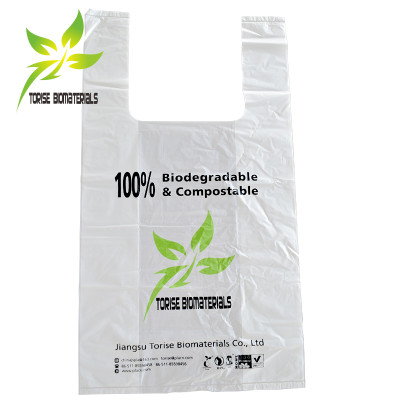
Behind the Compostable Bag: Compostable vs. PE Strength
Behind the Compostable Bag: Compostable vs. PE Strength
Compostable bags can be engineered to meet the physical performance requirements of many commercial applications. The required performance depends on the film formulation, thickness, bag structure and intended use.
In many applications, yes. Compostable films can be formulated to provide the tensile strength, flexibility, tear resistance and load capacity required for specific bag applications.
The key factors are the film formulation, thickness, bag structure and intended use.
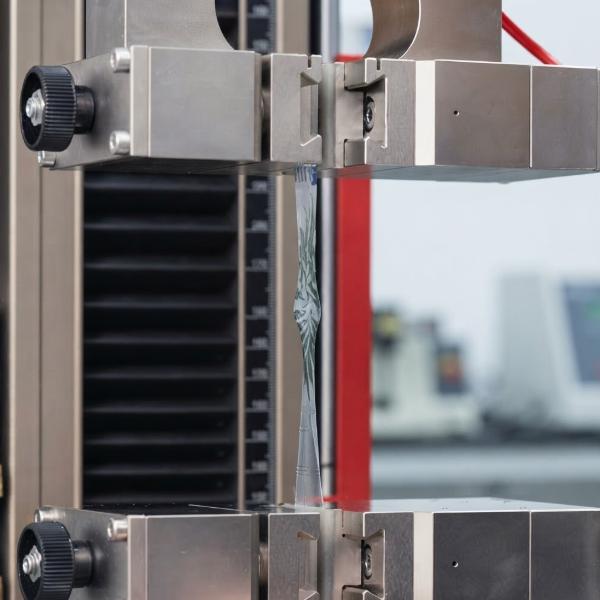
For example, Torise compostable produce bags use approximately 10 μm film, with specified tensile strength of ≥30 MPa in MD and ≥12 MPa in TD, and a maximum recommended load of approximately 1.8 kg.
This is an example of how a thin compostable film can be designed around a defined commercial application.
PE has a long-established range of film grades with well-known strength and toughness characteristics. Compostable films use different formulations, commonly combining materials such as PBAT, PLA and starch-based components.
Different formulations produce different mechanical properties.
Published technical data for a 50 μm PBAT/PLA film, for example, reports approximately:
Example: 50 μm PBAT/PLA Film
Tensile strength: 26 MPa MD / 23 MPa TD
Elongation at break: 590% MD / 670% TD
Published PE film specifications also show a broad range of mechanical performance depending on resin type and film structure.
For buyers, the comparison should therefore be based on the actual film specification and finished-bag requirements.
For most commercial bag applications, buyers should look beyond tensile strength.
A bag may have good tensile strength but still fail because of a weak seal or poor tear resistance. That is why finished-bag performance is more useful than a single film-strength number.
Film thickness directly affects mechanical performance, but thickness should be selected according to the application.
A produce bag designed for lightweight fresh produce does not need the same construction as a heavy-duty waste bag.
Typical requirements include:
Torise compostable produce roll bags are available in sizes such as 170 × 250 mm, 200 × 300 mm and 250 × 350 mm, using approximately 10 μm film.
Specified Performance
MD tensile strength: ≥30 MPa
TD tensile strength: ≥12 MPa
Maximum recommended load: approximately 1.8 kg
The specification is designed around the actual use of the bag rather than simply maximizing film thickness.
Food storage bags require a different performance balance.
For zipper bags, the zipper and side seals are part of the performance system. A strong film alone does not guarantee a reliable finished bag.
For heavier applications, buyers may require:
The formulation and thickness should be selected according to the actual contents and handling conditions.
A useful comparison should consider the actual material specification, bag structure and intended application.
Both materials have different grades and formulations. A meaningful comparison should therefore use the same bag size, thickness range, application and test requirements.
For a commercial sourcing project, request measurable specifications rather than general performance claims.
This allows buyers to compare suppliers using measurable specifications rather than claims such as “strong,” “heavy duty” or “PE-equivalent.”
Compostable bags do not have to be weak to be compostable.
With the right formulation, film thickness and bag structure, compostable films can be designed to meet the physical performance requirements of many commercial bag applications.
The correct specification depends on the product being packed.
For a produce roll bag, this may mean 10 μm film, defined tensile strength and a 1.8 kg load requirement.
For a food storage zipper bag, flexibility, seal strength and leak resistance may be more important.
For a heavy-duty bag, tear resistance, puncture resistance and load capacity become more critical.
Are Compostable Bags as Strong as PE Bags?

Compostable vs. PE: What Changes?
What Strength Properties Matter?
Property
Why It Matters
Tensile Strength
Resistance to pulling and stretching
Elongation
Ability to stretch without breaking
Tear Strength
Resistance to a tear spreading
Puncture Resistance
Protection against sharp or concentrated impact
Seal Strength
Resistance of the sealed area to opening
Load Capacity
Actual weight the finished bag can carry
Thickness Matters, But Thicker Is Not Always Better
Produce Roll Bags
Food Storage & Zipper Bags
Heavy-Duty Bags
How Should Buyers Compare Compostable and PE Bags?
Requirement
PE Bags
Compostable Bags
Tensile strength
Depends on PE grade and thickness
Depends on formulation and thickness
Flexibility
Depends on PE type
Depends on formulation
Tear resistance
Established across many grades
Formulation-dependent
Puncture resistance
Grade and thickness dependent
Formulation and thickness dependent
Seal performance
Depends on film and sealing process
Depends on film and sealing process
Load capacity
Depends on finished bag design
Depends on finished bag design
Compostability
No
Available with appropriate certified formulations
What Should You Request From a Compostable Bag Supplier?
Film Specification
Mechanical Performance
Application
Compliance
The Bottom Line
Specify the performance required for the application, then select the compostable formulation and film structure that meets it.