Conventional Plastic vs. PCR Plastic: Key Differences
Conventional plastic and post-consumer recycled (PCR) plastic can both serve a wide range of packaging applications, but they differ in raw material origin, consistency, and sustainability considerations. For food brands, retailers, distributors, and packaging importers, the right choice depends on product specifications, regulatory requirements, and procurement objectives—not simply the recycled content percentage.
Conventional plastic is generally produced from virgin polymer resin made using newly extracted fossil-based feedstocks. Common materials include polyethylene (PE), polypropylene (PP), and polyethylene terephthalate (PET).
PCR plastic is produced from plastic products collected after consumer use, then sorted, cleaned, and reprocessed into recycled resin. Depending on the recycling process and feedstock, PCR resin may be used in films, bags, bottles, containers, and other packaging products.
Neither material is automatically better in every application. A well-controlled PCR grade may perform well in a suitable packaging application, while an unsuitable recycled grade can create problems with appearance, strength, or production stability.
For B2B buyers, the key question is whether recycled resin can meet the finished product's specifications consistently.
Reprocessing can affect polymer properties, depending on the resin and its recycling history. Evaluate tensile strength, elongation, tear resistance, puncture resistance, and load-bearing performance where relevant.
PCR resin may have a grayish or yellowish tint, haze, or small visible inclusions. This may be acceptable for dark-colored bags, shipping packaging, and applications without strict appearance requirements, but less suitable for transparent packaging.
Recycled feedstock requires effective sorting, cleaning, and contamination control. Residual odor or contamination can affect product acceptance, especially in sensitive packaging applications.
Differences in melt flow, moisture, or contamination can affect extrusion, film thickness, printing, and heat sealing. Trial production helps establish suitable processing conditions before mass production.
PCR pricing and availability depend on polymer type, feedstock supply, recycled content, quality requirements, and market conditions. PCR should not automatically be assumed to cost less than virgin resin.
Not automatically. Recycled plastic intended for food contact must meet applicable food-contact requirements for the target market and intended conditions of use.
The US FDA identifies potential contamination, unauthorized substances, and additives that may not comply with food-contact requirements as key considerations when evaluating recycled plastics. Its assessment considers the recycling process, feedstock controls, decontamination, and intended use.
Read the FDA guidance on recycled plastics in food packaging.
Before approving PCR for food packaging, buyers should establish:
PCR can be suitable for certain food-contact applications when the material and recycling process meet applicable requirements. Recycled content by itself does not establish food-contact safety. Non-food-contact applications may offer a more straightforward starting point when documentation for direct food contact is unavailable.
A supplier's statement that a product contains recycled material should be supported by clear documentation. Before approving a supplier, ask for the following:
ISCC PLUS can support traceability and verified sustainability claims for products linked to recycled or renewable feedstocks. Its chain-of-custody approaches include physical segregation, controlled blending, and mass balance.
The final decision should consider total purchasing requirements: material cost, production yield, defect rate, regulatory compliance, recycled-content targets, and customer acceptance.
PCR is one material strategy, not a universal substitute for every sustainability objective.
The relevant certification depends on the material and claim. ISCC PLUS may support claims related to recycled or bio-based feedstocks. EN 13432 and BPI certification relate to compostability requirements and claims, while DIN CERTCO offers certification schemes for compostable products and materials. FSC certification concerns responsible forest-based materials, such as qualifying paper packaging—not PCR plastic itself.
These certifications are not interchangeable. Buyers should verify the applicable scheme, certified product or site, and scope before using a certification to substantiate a packaging claim.
The best material is the one that meets your product specifications, regulatory requirements, sustainability targets, and supply-chain needs.
Torise supports B2B buyers with material selection and packaging customization across conventional plastics, recycled materials, bio-based materials, and compostable solutions. Our approach is to match material options to the intended application, required performance, and available documentation rather than recommend one material for every use.
When requesting a quotation, provide your packaging type, dimensions, thickness, intended use, target recycled-content percentage, destination market, and any required certifications. These details help establish a realistic specification and identify which materials are suitable for sampling and mass production.
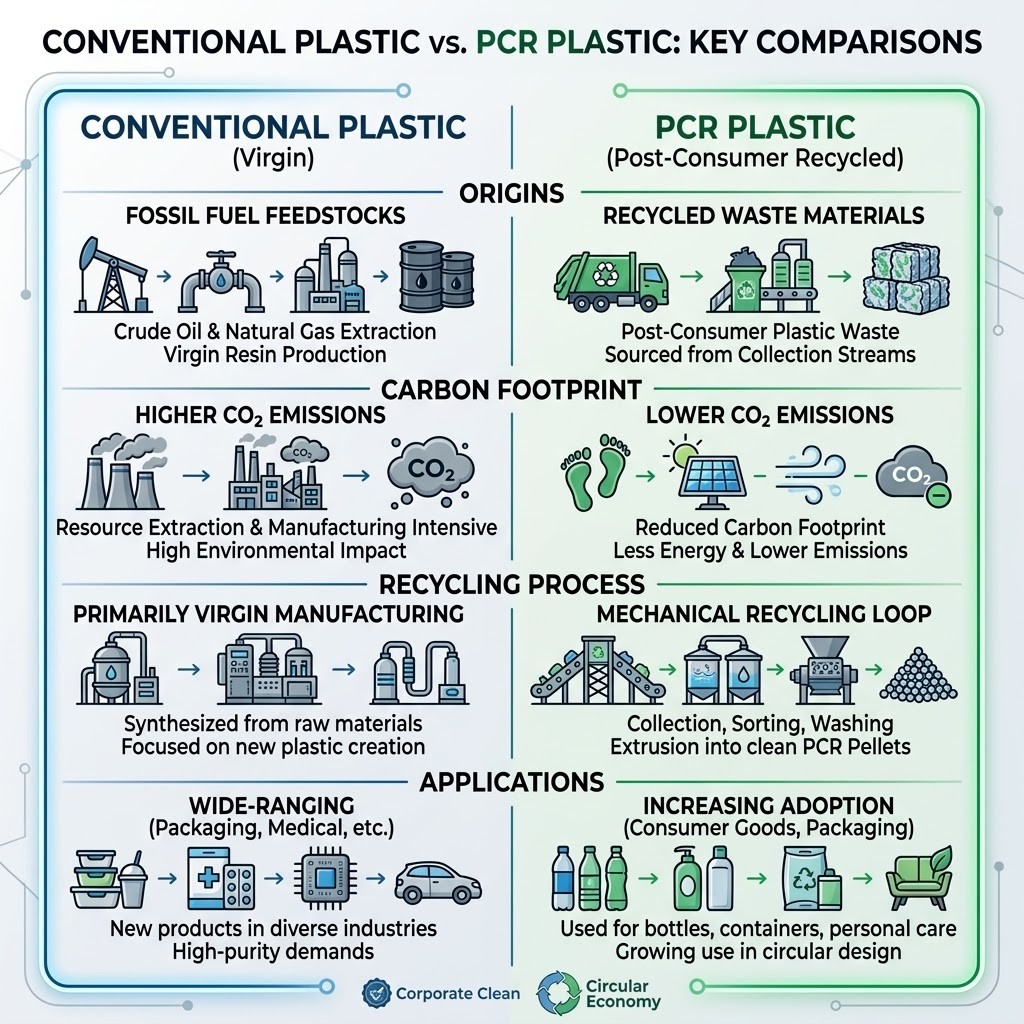
Conventional Plastic vs. PCR Plastic: Key Differences
1. What Is the Difference Between Conventional Plastic and PCR Plastic?
2. Conventional Plastic vs. PCR Plastic: Key Differences
Factor
Conventional Plastic
PCR Plastic
Raw material
Virgin polymer resin
Reprocessed post-consumer plastic waste
Consistency
Generally more predictable within a specified grade
Can vary with feedstock and recycling process
Appearance
Easier to control color and clarity
May show color variation, haze, or visible specks
Performance
Established baseline for the selected resin grade
Must be verified for the specific grade and application
Cleanliness and odor
Depends on resin quality and additives
Requires careful feedstock and contamination control
Processing
Often compatible with established production settings
May require adjustments to extrusion, printing, or sealing
Sustainability
Does not inherently reuse post-consumer plastic
Incorporates recovered plastic and may reduce virgin resin demand
Procurement focus
Consistency, performance, and cost
Recycled content, traceability, quality, and end-use suitability
3. How Does PCR Plastic Affect Packaging Performance?
Mechanical Strength
Appearance and Color
Odor and Cleanliness
Processing Stability
Cost and Supply
4. Is PCR Plastic Suitable for Food Packaging?
5. How Can Buyers Verify PCR Content and Sustainability Claims?
6. Which Material Should You Choose?
7. How Does PCR Compare with Other Sustainable Packaging Materials?
8. Work with a Packaging Manufacturer on Material Selection