How PLA, PBAT and Starch Work Together in Biodegradable Raw Materials
BIODEGRADABLE RAW MATERIALS
PLA, PBAT and starch-based materials are commonly used in biodegradable and compostable product formulations, but they do not perform the same function.
PLA can provide stiffness and structural strength. PBAT adds flexibility and elongation. Starch-based components can contribute bio-based content and can be incorporated into different formulation systems. In practical production, these materials are often combined rather than used independently.
The key is not simply choosing a biodegradable raw material. It is developing a formulation that provides the right balance of processing behavior and finished-product performance for a specific application.
The performance of a biodegradable material starts with the properties of its individual components.
PLA is a bio-based polymer known for its relatively high stiffness and strength compared with many flexible biodegradable materials.
In packaging applications, PLA can help provide structure and dimensional stability. It can also contribute to clarity in suitable formulations.
However, PLA alone is not always the best choice for products that need to stretch, fold or withstand repeated deformation. Flexible bags and films generally require a greater degree of toughness and elongation.
PBAT is a flexible biodegradable polymer that is commonly used in films and bags where flexibility and elongation are important.
Its flexibility makes it useful for products such as garbage bags, shopping bags and other thin-film applications that need to bend or stretch without breaking easily.
When combined with more rigid materials such as PLA or starch-based components, PBAT can help balance the formulation and improve its suitability for flexible applications.
Starch comes from renewable agricultural sources such as corn and other crops. In biodegradable material formulations, starch-based components may be incorporated with biodegradable polymers rather than simply replacing them.
The amount and type of starch used can affect processing behavior, mechanical properties and the overall characteristics of the resulting material.
This is why “starch-based” alone does not describe the complete performance of a finished biodegradable resin. The polymer system, formulation and processing conditions all matter.
The main reason for blending these materials is that their properties complement each other.
A formulation designed for a flexible bag may need sufficient strength, but it also needs to stretch during production and use. A material designed for a rigid application may require very different characteristics.
Blending allows manufacturers to adjust the balance between properties instead of relying on one material to provide everything.
The purpose of blending is not to make every property “better.” It is to find the right balance for the intended product.
This distinction is important when evaluating biodegradable raw materials. A resin with very high stiffness may not be suitable for a flexible film, while a highly flexible formulation may not provide the structure required for another packaging format.
The resin is not the finished product.
The final performance of a biodegradable bag or film depends on more than the material name printed on a specification sheet. Formulation, processing conditions, film thickness, product structure and converting processes can all influence the result.
Garbage bags, shopping bags and thin packaging films often need to stretch during use.
A formulation with insufficient flexibility may become difficult to process or more prone to cracking, while excessive flexibility may reduce the stiffness needed for certain products.
The balance between PLA, PBAT and other formulation components therefore needs to match the application.
Strength is not determined by a single ingredient.
The interaction between the polymer components, formulation ratio and processing conditions can affect tensile strength, elongation and resistance to tearing.
For a bag manufacturer, this means that simply comparing the tensile strength of two raw materials may not fully predict how the finished bag will perform.
For blown-film applications, the material must also behave consistently during extrusion.
Melt behavior, temperature sensitivity, formulation stability and processing conditions can influence film formation, thickness consistency and production efficiency.
A formulation that performs well in laboratory testing may still require production trials to confirm its behavior on a particular extrusion line.
For bags and packaging films, sealing performance is another practical consideration.
The formulation can affect sealing temperature, seal strength and the processing window available during bag conversion. These characteristics should therefore be evaluated together with the intended film thickness and production process.
Different products place different demands on the material.
Garbage bags generally require flexibility, elongation and sufficient tear resistance. A formulation with a stronger flexible component may therefore be appropriate.
Shopping bags need a balance of strength, flexibility and handle performance. Printing and converting requirements may also influence the material selection.
Produce bags and thin films place greater emphasis on stable extrusion, thin-gauge film formation and consistent thickness. The formulation needs to remain processable at a relatively low film thickness.
This is why a biodegradable resin should be evaluated according to its intended application rather than simply by whether it is labeled “PLA-based,” “PBAT-based” or “starch-based.”
Two biodegradable resins can both be marketed for film production while behaving differently during manufacturing.
Differences may come from:
For manufacturers, the practical question is therefore not only:
“What material is this?”
It is also:
“How is the material formulated, and what has it been designed to do?”
This becomes particularly important when changing suppliers. A replacement resin may have a similar material description but still require adjustments to extrusion temperature, line speed, film thickness or bag-making conditions.
A useful evaluation should go beyond price and the material name.
Understand the main polymer components and the role they play in the formulation. If the material is a blend, the formulation should be clearly defined rather than described only as a generic biodegradable resin.
Tell the supplier what you are producing—such as garbage bags, shopping bags, produce bags or other films. The same raw material may not be equally suitable for every product.
Review relevant properties such as tensile strength, elongation, density, melting or processing range, and other application-specific data provided in the TDS.
These values are useful for comparison, but they should not replace actual production testing.
Before moving to a large order, test the material on the actual production equipment whenever possible.
A trial can reveal issues that laboratory data alone cannot show, including extrusion stability, film formation, sealing and bag-making performance.
For ongoing production, consistency between batches is just as important as the performance of the first sample.
Stable raw material properties can help manufacturers maintain consistent film thickness, mechanical performance and processing conditions over repeated production runs.
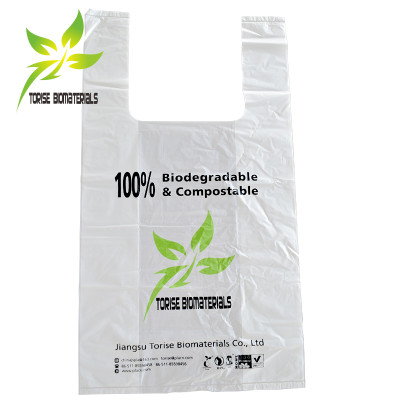
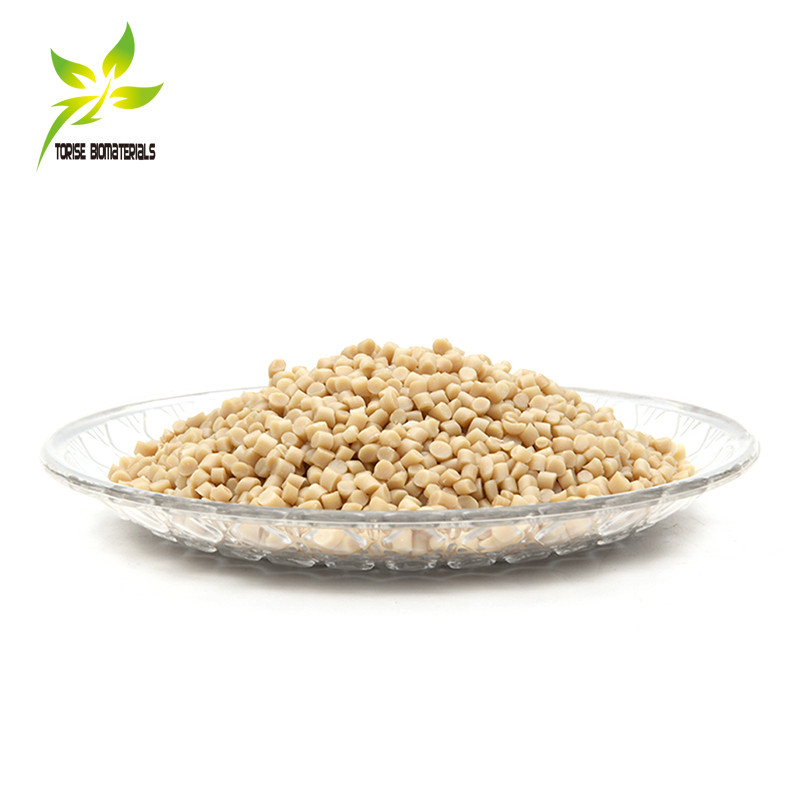
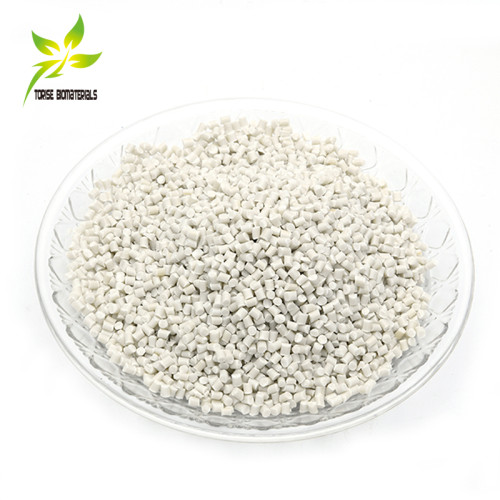
Torise develops biodegradable material formulations based on combinations such as PLA, PBAT and cornstarch, with materials designed for applications including blown film, bags and other disposable products.
An important part of this work is the connection between raw material development and finished-product manufacturing. Because material performance ultimately needs to be evaluated in the finished product, experience with both resin formulation and downstream film and bag production can help identify whether a formulation is suitable for a specific application.
For example, Torise's TRBF90 formulation combines PLA, PBAT and cornstarch and is designed for blown-film and bag applications. Its technical specifications and certifications provide a starting point for material evaluation, while production trials remain important when adapting the resin to a specific product and manufacturing process.
PLA, PBAT and starch are not interchangeable raw materials. Each contributes different characteristics to a biodegradable formulation.
PLA can provide structure and stiffness. PBAT can contribute flexibility and elongation. Starch-based components can contribute bio-based content and formulation flexibility.
When these materials are combined, the objective is to create a balanced formulation suited to the intended application and manufacturing process.
For manufacturers, the most useful way to evaluate biodegradable raw materials is therefore to look beyond the material name. Formulation, technical properties, processing behavior and production results all need to be considered together.
How PLA, PBAT and Starch Work Together in Biodegradable Raw Materials
PLA, PBAT and Starch: Different Roles in a Formulation
Material
Typical Contribution
PLA
Stiffness, structure and clarity
PBAT
Flexibility, elongation and toughness
Starch-based materials
Bio-based content and formulation flexibility
PLA: Structure and Stiffness
PBAT: Flexibility and Elongation
Starch-Based Materials: A Formulation Component
Why Are PLA, PBAT and Starch Blended?
How Does the Formulation Affect the Finished Product?
Flexibility and Elongation
Strength and Toughness
Film Processing
Heat Sealing
There Is No Single Formula for Every Biodegradable Product
Biodegradable Garbage Bags (PLA, PBAT and Starch)
Biodegradable Shopping Bags (PLA, PBAT and Starch)
Biodegradable Produce Bags and Thin Films (PBAT and PLA)
Biodegradable Dog Poop Bags (PLA, PBAT and Starch)
Why the Formulation Matters More Than the Material Name
What Should Manufacturers Check When Sourcing Biodegradable Raw Materials?
1. Formulation
2. Intended Application
3. Technical Data
4. Production Trials
5. Batch Consistency
Torise Biodegradable Raw Material Formulations
The Bottom Line