
Home / All / Custom Compostable Bags / Custom Compostable Pet Waste Bags / Custom Printed Compostable Dog Poop Bags for Private Label Brands
Custom Printed Compostable Dog Poop Bags for Private Label Brands
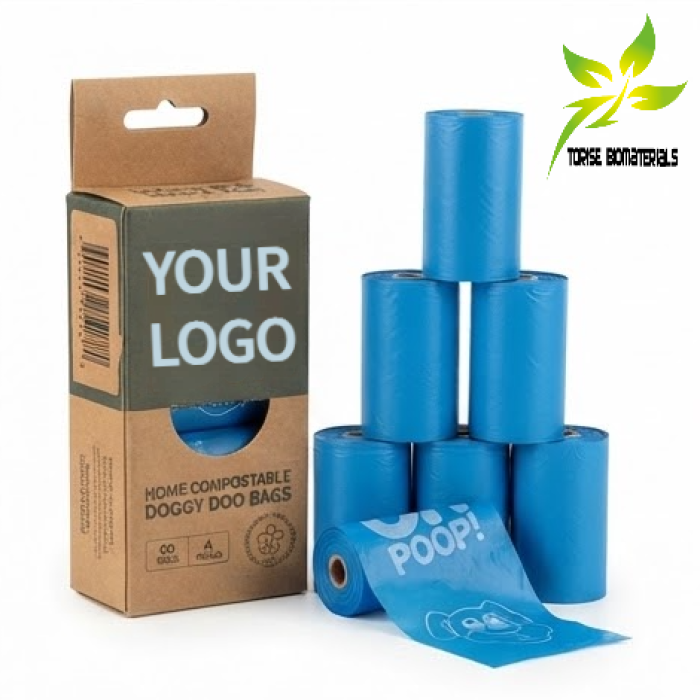

| Share | |
|---|---|
| Categories | Custom Compostable Pet Waste Bags |
| Brand | Torise Biomaterials |
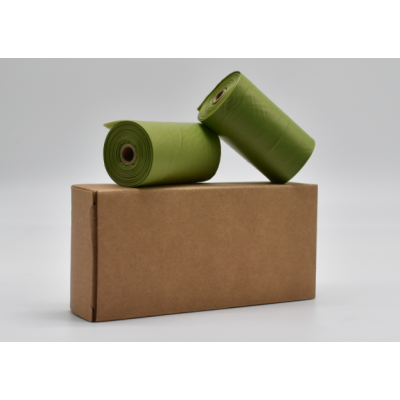
| Product Type | Compostable Dog Poop Bags |
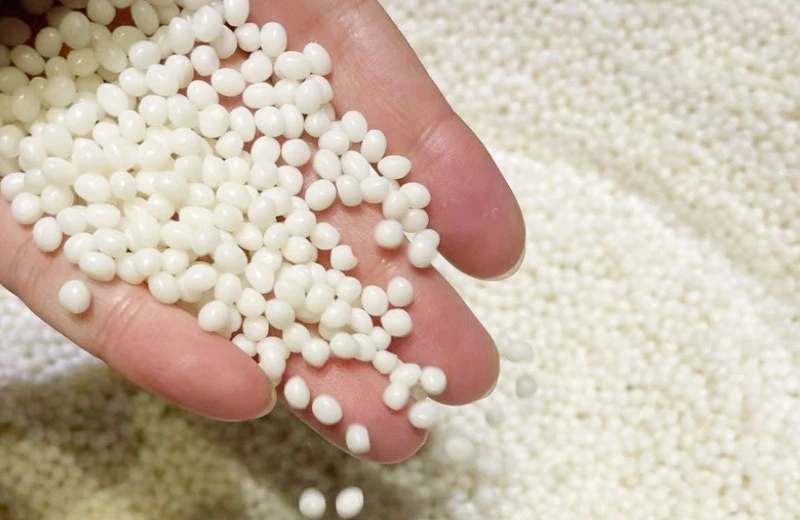
| Material | PBAT + PLA + Starch / PBAT + PLA |
| Bag Size | S: 220 × 330 mm / M: 230 × 330 mm / L: 230 × 380 mm |
| Thickness | S: 12–15 μm / M: 15–17 μm / L: 17–20 μm |
| Printing | Custom Printed / Custom Logo |
| Color | Custom Color / Pantone Matching |
| Packaging | Custom Printed Box / Carton / Private Label Packaging |
| Logo | Custom Logo Available |
| Certification | EN 13432 / ASTM D6400 / AS 4736 / AS 5810 / TÜV OK Compost HOME |
| Customization | Size, Thickness, Printing, Packaging & Branding |
| MOQ | Customizable Based on Specification & Packaging |
| Download |  |
Detail Information
Sizes & Thickness
Standard Dog Poop Bag Sizes & Thickness Options
Choose the bag size and film thickness according to dog size, waste volume, expected load and target product cost. Our standard compostable dog poop bags are available in three practical size ranges, with thickness adjustable for different private label requirements.
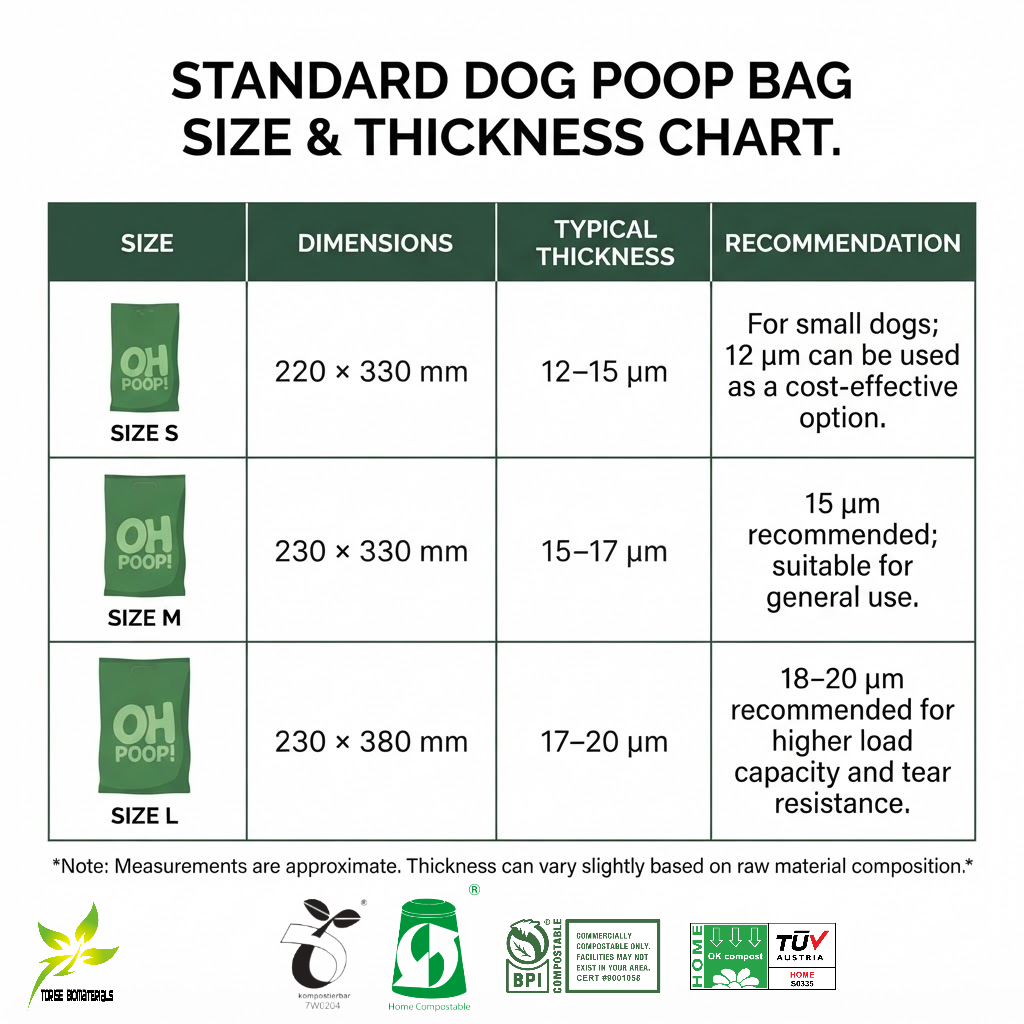
Standard Size & Thickness Guide
The following specifications provide a practical starting point for standard retail and private label dog waste bag programs.
| Size | Dimensions | Typical Thickness | Recommendation |
|---|---|---|---|
| S | 220 × 330 mm | 12–15 μm | For small dogs; 12 μm can be used as a cost-effective option. |
| M | 230 × 330 mm | 15–17 μm | Standard size; 15 μm is recommended for general use. |
| L | 230 × 380 mm | 17–20 μm | For larger dogs; 18–20 μm is recommended for higher load capacity and tear resistance. |
How to Choose the Right Size
Bag size should be selected based on the expected waste volume and the amount of material needed to tie and handle the filled bag. A larger bag is not always necessary for every dog, while an undersized bag can make tying and handling more difficult.
220 × 330 mm
Suitable for small-dog waste bags where a compact format and lower material consumption are important. A thickness around 12 μm can be considered when the target product is focused on cost efficiency.
230 × 330 mm
The most versatile standard format for general retail and private label programs. Around 15 μm provides a practical starting point for balancing bag strength, material consumption and target cost.
230 × 380 mm
Designed for larger dogs and applications where a larger waste volume needs to be contained. A thickness of approximately 18–20 μm is recommended when higher load capacity and tear resistance are required.
How Thickness Affects Bag Performance
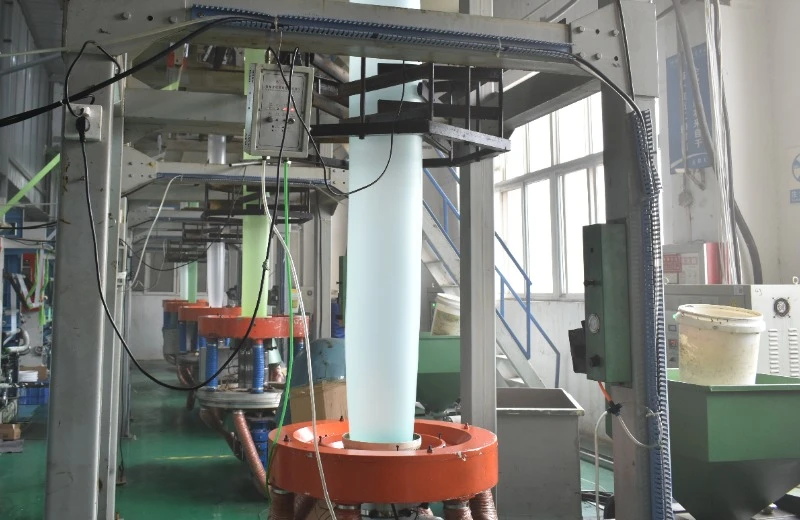
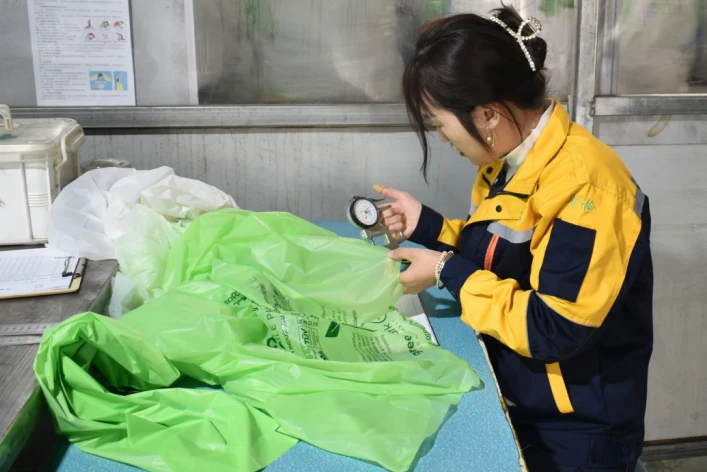
Film thickness affects material consumption, handling strength and resistance to tearing. For the same bag dimensions, increasing thickness generally increases material usage and can improve resistance to puncture and tearing, but thickness should be selected together with the material formulation and film processing conditions.
For cost-sensitive products, a thinner specification may be appropriate when the bag size and expected load are relatively small. For larger formats, increasing thickness helps provide additional material strength without relying on bag dimensions alone.
For custom orders, the final thickness should be confirmed through samples and performance testing. Bag strength depends not only on thickness, but also on the compostable resin formulation, film quality and bottom-seal performance.

Related Products

Review
- 加载中···
Please send your message to us
Torise Biomaterials focuses on R&D and manufacturing of sustainable plastic products. We offer both OEM and customized service with good quality. If you are interested in more details, warmly welcome to leave your message. We could offer you:
1. Free samples for trustworthy cooperation 2. We have customized design solutions for sustainable plastic products.- *Title
- *Content
Contact Person

- Full Name:
- Sales Team
- Tel:
+86 18151919890
+86 0511-85598456
- Email:
- sales@torisegroup.com
- Address:
- Bio based industrial zone, Nanle County , Puyang , Henan , China
subscription